

A rental-enquiry checklist for owners across India: clarify intended use, exact requirements, dates, location and responsibilities before accepting a request.
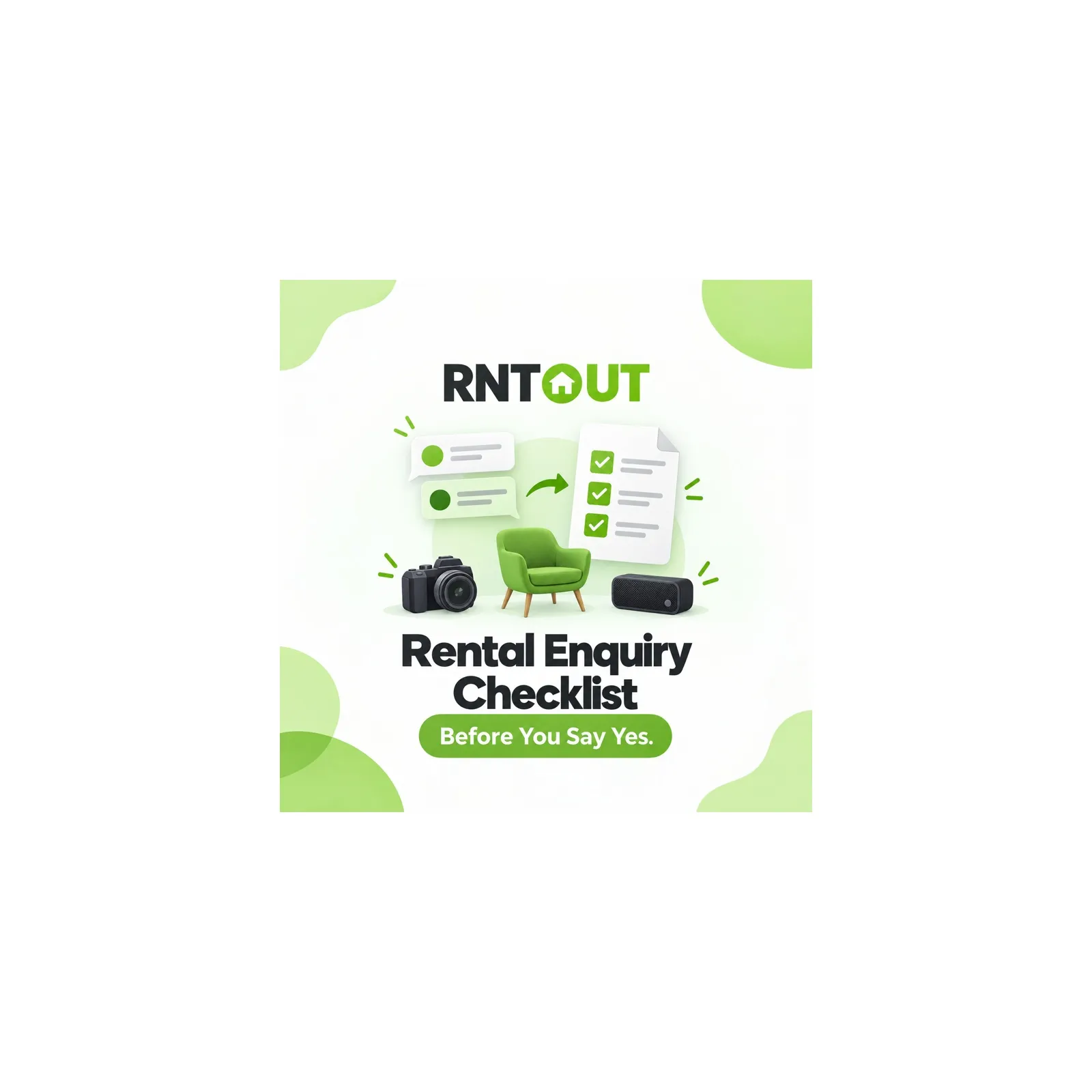
A rental enquiry can sound simple: is this item available? For an owner, the useful answer depends on more than a free date in a calendar. You need to understand the intended use, the exact requirement, where the item will go and who will be responsible for each part of the arrangement. A short, consistent conversation can reveal whether both sides are discussing the same rental before either makes a commitment.
This guide develops the enquiry stage for owners across India. It is separate from writing a product listing, comparing rental prices or inspecting an item at delivery. RNTOUT is a multi-category rental marketplace connecting people who have products with people who need temporary access. Its message is: "You Have It. Someone Needs It. Rent It. Earn From It!" That invitation still needs a clear, booking-specific conversation. The questions below are a practical planning aid, not a claim about RNTOUT's verification tools or a guarantee against loss.
Record the product requested, the job it must do, the dates and location, the people involved and any requirements that still need checking. Separate a confirmed answer from an assumption. If the request changes, review the affected details again rather than carrying an earlier yes into a different arrangement. Use the platform's current process for booking, verification and payment. Do not improvise a document-collection process or promise approval while important questions remain unanswered.
Begin with the intended use in ordinary language. A request for a camera might concern a familiar indoor setup or an unfamiliar outdoor assignment. A request for furniture might concern a temporary home or an event with different access arrangements. The product category alone does not explain the task. Ask what the person needs the item to do and which requirement matters most.
Keep the question relevant rather than intrusive. You do not need a person's private life story to understand a product requirement. A useful enquiry describes the setting, the activity and the limits that affect suitability. Do not infer someone's reliability from an occupation, accent, neighbourhood or social-media appearance. Focus on the arrangement you can establish and the platform's applicable checks.
If the stated use is outside your knowledge, say so. Owning an item does not automatically make you qualified to approve every use of it. Specialist, medical, vehicle or powered-equipment requests may require qualified guidance and product-specific permissions. An enquiry checklist is not a substitute for those checks.
Ask which details are essential and which are preferences. A particular connection, size, component or model may be necessary for the planned task. A preferred colour may not be. Record the distinction so that a later alternative can be assessed against the actual need rather than described as equivalent without evidence.
Use a question-and-answer note rather than a confident guess. If a renter names another device the item must work with, obtain the exact relevant details and verify compatibility before confirming. A similar-looking connector or familiar product name does not settle that question. If you cannot establish the answer, leave it open and tell the renter what still needs checking.
Avoid copying a specification from another listing to make the conversation move faster. The enquiry concerns the item you can actually offer. For public listing preparation, use the separate RNTOUT listing guide . Here, the task is checking whether that offer answers this particular request.
Write down when the renter needs the item ready for use and when the use will finish. Then discuss the proposed collection, delivery and return arrangements through the applicable booking process. These are related details, but they are not interchangeable. A requested date is not a reservation, and a conversation about availability is not confirmation that every other requirement has been accepted.
Ask whether the dates are settled or depend on another decision. An event venue may not yet be confirmed. A temporary project may still be waiting for approval. You can record that uncertainty without promising to hold an item indefinitely. Explain which answers are still needed before you can give a definite response.
If someone changes the dates, do not simply replace one number in an old message. Check whether the location, access arrangements, people involved or intended use also changed. A revised enquiry should describe the revised job. Do not imply that the original availability or terms automatically carry forward.
Ask for the location information needed to assess the proposed arrangement. The useful detail might be the town and locality at an early stage, followed by the specific handover information when the booking process requires it. Do not request or circulate more personal address information than the task needs.
Where relevant, ask about access constraints before confirming an arrangement: whether the item must pass through a narrow entrance, whether a building has stated delivery windows, or whether someone must be present to receive it. These are questions for the particular item and location, not a promise that an owner or delivery service can meet every request.
India-wide content does not mean every listed product is available at every address. Check the current listing and platform process for the actual location. Avoid converting a broad service description into a guaranteed delivery area, installation service or collection commitment.
A person asking the question may not be the person collecting, using or returning the item. Ask how those roles are expected to work. Keep the booking account and the authorised process clear rather than accepting an unexplained change at the last moment.
For a group request, identify one practical point of contact for unanswered questions. That does not mean this person automatically assumes every legal or financial responsibility. Those matters depend on the applicable terms. The purpose of the enquiry note is to prevent a conversation in which each participant assumes someone else has agreed to an important detail.
If a different person will collect the item, follow the platform's current instructions for that situation. Do not invent an identity check or accept a photograph forwarded by an unknown contact as sufficient proof. Ask the platform how to handle an unresolved mismatch before proceeding.
Ask what verification the current booking process requires and where it should be completed. Do not tell renters to post identity documents publicly, place them in listing comments or send copies to a growing group chat. A phone number or social profile can provide contact context, but it does not by itself establish identity or permission.
Collect only the information the approved process calls for. Keep access to the enquiry note limited to the people who need it for the booking. Avoid placing payment credentials, identity-document images or unrelated personal details inside an informal planning sheet. Clear product requirements should not become an excuse for unnecessary data collection.
Verification also does not prove that an item is suitable for a particular use. Keep those decisions separate. Completing an account step cannot answer a technical compatibility question, and a friendly conversation cannot replace a required platform check. If you do not understand what a verification result means, seek clarification rather than advertising the renter as fully checked.
An enquiry note works best when it shows what is known and what remains open. Use simple statuses such as confirmed, awaiting renter answer, owner checking, or not suitable. Name the next question rather than writing a vague reminder to follow up.
For example, an enquiry for a projector might have settled dates but an unresolved input connection. The next step is not to repeat that the projector is available. It is to establish the required connection and verify the actual equipment. If that cannot be done, the owner should avoid promising that the setup will work.
Keep an earlier message when an answer changes so you can understand the sequence. The aim is an accurate current summary, not an ever-longer conversation that nobody can follow. Before accepting the arrangement, read the final note as though you had not seen the earlier messages. Any essential blank should still be visible.
You can pause when a requirement is unclear, a proposed use is outside the item's confirmed scope, or the requested arrangement cannot be handled through the applicable process. Give a short factual reason. You do not need to accuse someone of bad intent to say that the enquiry is incomplete or that you cannot offer the requested arrangement.
Do not let urgency turn an unanswered question into an assumed yes. A last-minute request still needs an exact product and a workable plan. Equally, do not describe routine uncertainty as evidence that a person is dishonest. Ask the relevant question and decide from the answer and the current rules.
A useful response explains what would need to change: a different confirmed requirement, a supported collection arrangement or completion of a required platform step. If the item is simply unsuitable, say that clearly rather than accepting and hoping the problem will disappear at delivery.
Use the following short structure as a planning aid. It is not an RNTOUT form or a rental contract. Keep the accepted booking and applicable terms as separate records.
Product requested: the exact item or requirement being discussed.
Intended use: the task and setting relevant to suitability.
Essential requirements: checked needs, with preferences kept separate.
Dates and location: requested use window and proposed arrangement.
People and roles: booking contact, proposed collector, user and return contact, as applicable.
Open questions: the missing answer and who is checking it.
Current decision: awaiting information, unsuitable, or ready for the next booking step.
Do not copy the note unchanged into every enquiry. Remove fields that are irrelevant and add a product-specific question when it genuinely matters. Keep personal information out unless the authorised process requires it. Once the booking is accepted, move to the separate delivery-stage checks in the rental handover guide .
No. A question about availability does not by itself confirm the product, dates, arrangements or applicable terms. Follow the current booking process and make unresolved details visible.
Do not invent a document-collection requirement. Follow the platform's current verification process and use its approved channel. Avoid putting private documents in public comments or informal group chats.
Clarify the proposed roles and follow the platform's instructions for authorised collection. Do not assume that a forwarded message or familiar name settles permission.
Only confirm what you can establish for the actual item and requirement. Where technical suitability or specialist use is unresolved, seek the relevant guidance or leave the question open rather than guessing.
Review the affected requirement, dates, location and roles again. Keep the latest clear summary and do not assume that an earlier answer applies to a different arrangement.
No. It is a way to organise questions before a decision. It does not replace applicable terms, verification, qualified advice or the product's own requirements, and it cannot guarantee an outcome.
A useful enquiry ends with a shared understanding of the task, not simply a quick yes. Explain what you know, name what still needs checking and decline arrangements you cannot support. Owners and renters can explore the current marketplace and use its current process for the next step. Keep the conversation focused on this item, this requirement and this proposed rental.

RNTOUT is India's rental marketplace for everything: rent what you need, earn from what you own. See how it works and how to start.
Compare product rentals across India by the full cost, usable rental period and return terms. Use a renter-side checklist before deciding to rent or buy.
A practical rental handover checklist for India: match the delivered item, record its condition, count accessories and keep a clear return record.

A practical guide for rental owners in India: photograph the actual item, explain condition and accessories, and keep listing descriptions clear and accurate.
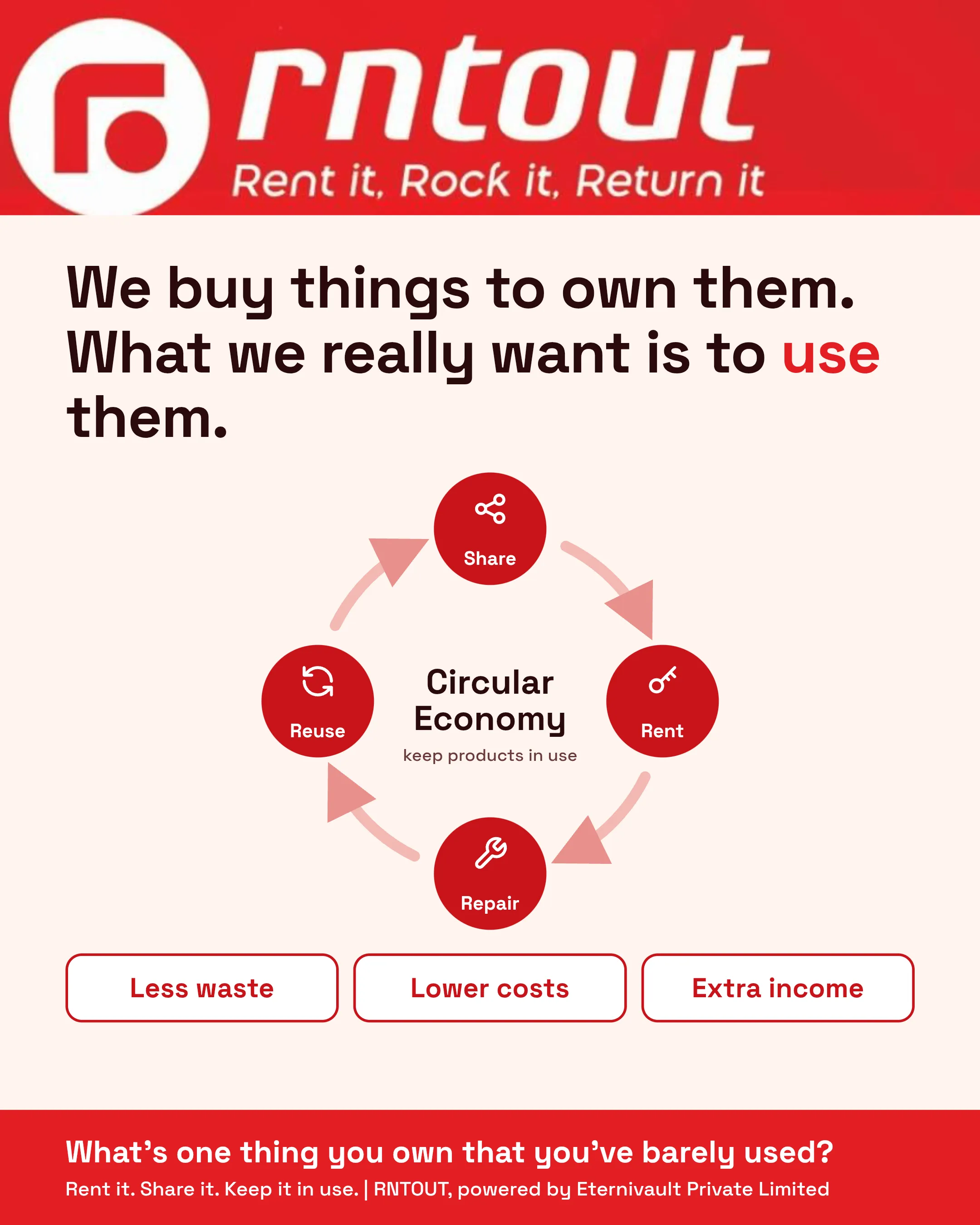
Most of what we own sits idle for months. The circular economy offers a smarter way: share, rent, repair and reuse so products stay in use for longer. Learn how this idea can cut waste, lower costs and create extra income, and what you can do today to get started.
Never miss out on a deal or an update.


