

Most of what we own sits idle for months. The circular economy offers a smarter way: share, rent, repair and reuse so products stay in use for longer. Learn how this idea can cut waste, lower costs and create extra income, and what you can do today to get started.
By the RNTOUT Team
Suggested keywords: circular economy, sharing economy, rent instead of buy, reduce waste, rental marketplace India
Take a quick look around your home. There is probably a drill used twice a year, a suitcase that travels on three trips, or a camera that came out for one holiday and went back into the cupboard.
We spent money on these things, used resources to make them and gave them space in our homes. Yet most of the time, they sit idle.
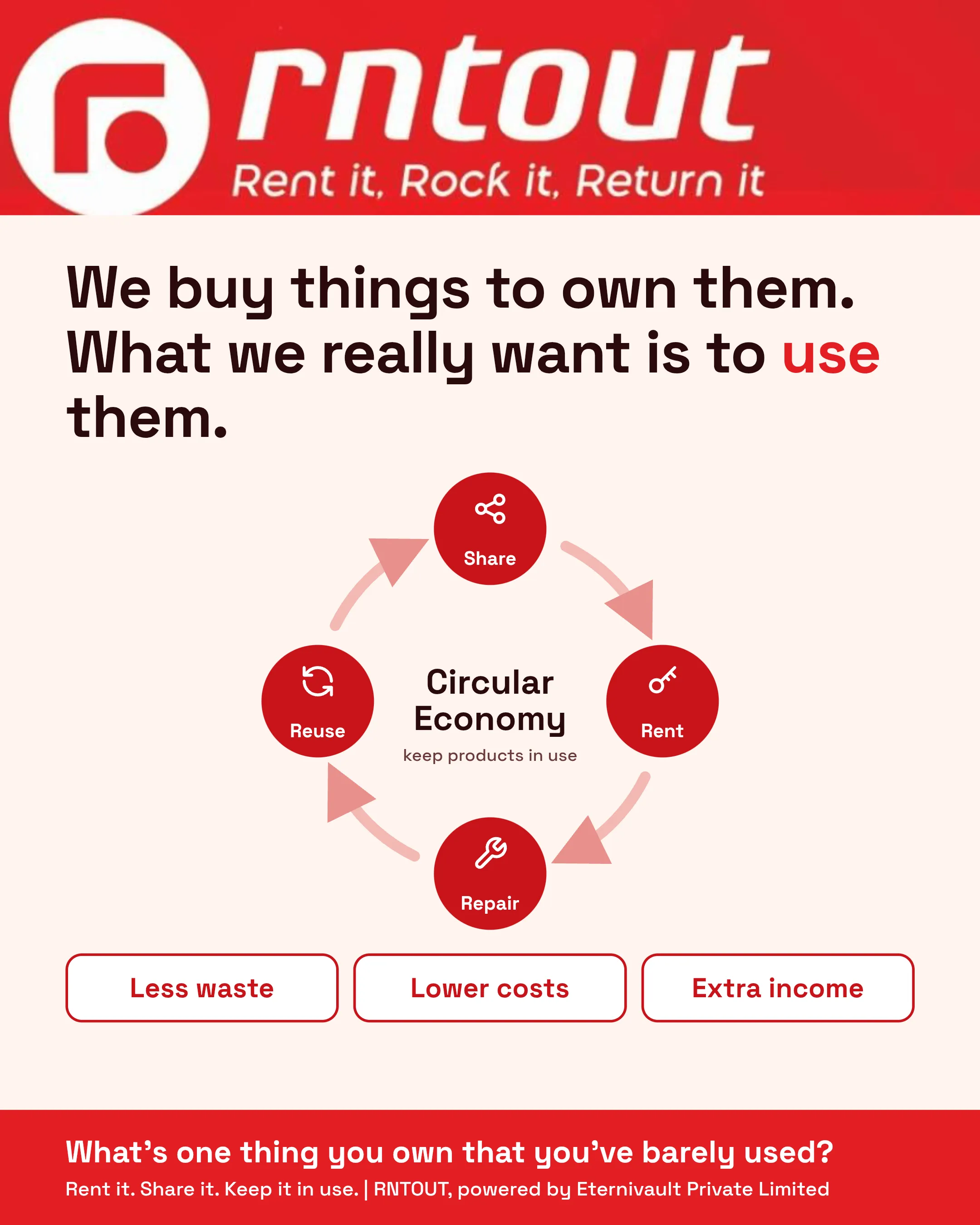
We buy things to own them. But what we really want is to use them. That simple difference is at the heart of the circular economy.
For a long time, the economy has worked in a straight line. Raw materials are taken from the earth, turned into products, sold, used for a while and then thrown away.
This linear model has a built-in weakness. It treats products as disposable and resources as endless. Every item that is discarded while it still works is a waste of the material, energy and effort that went into making it.
It is also a waste for us. When we buy something we only need occasionally, we pay the full price of ownership for a very small amount of use.
A circular economy asks a different question: how do we keep products and materials in use for as long as possible?
Instead of a straight line, think of a loop. Products are shared, repaired, reused and passed on, so they keep creating value instead of becoming waste.
1. Sharing One item serves many people instead of sitting unused in a single home. Think of tool libraries, shared vehicles and community exchanges.
2. Renting You pay for access when you need something, not for ownership. This works well for items used occasionally, such as party equipment, cameras, camping gear or furniture for a short stay.
3. Repairing A repaired product lives longer. Good repair habits delay replacement and keep useful items out of landfills.
4. Reusing What you no longer need can be valuable to someone else. Passing it on, selling it or renting it out gives it a second life.
The circular economy is often described as an environmental idea, but its benefits are practical and personal too.
None of this is completely new. Libraries, neighbours lending tools and community sharing have worked this way for generations.
What is changing is convenience. Technology now makes it simpler to find what you need, list what you do not, and agree on clear terms. As more people see the value of access over ownership, sharing and renting are becoming a normal part of how we live and spend.
The circular economy runs on trust. For sharing and renting to work well, both sides need to be responsible:
When these basics are in place, sharing becomes safe, simple and fair for everyone.
At RNTOUT, we are building a multi-category rental marketplace in India, powered by Eternivault Private Limited. It brings together individual owners and business vendors, and offers daily, weekly and monthly rental options across categories such as furniture, electronics, sports equipment and more.
Our belief is simple: the people who need something and the people who have it sitting unused should be able to find each other easily. But the idea is bigger than any one platform. It belongs to all of us.
You do not need to change your whole lifestyle. Small steps are enough:
Note: Income from renting out items is not guaranteed. It depends on demand, pricing and availability. For tax questions about rental income, please consult a qualified chartered accountant.
The future of consumption may not be about owning more. It may be about using smarter, sharing more and wasting less.
So here is a question to think about: What is one thing you own that you have barely used? Would you rent it out, or would you rather rent than buy next time?
Share your thoughts with us. We would love to hear them.
Rent what you need. List what you don't use.
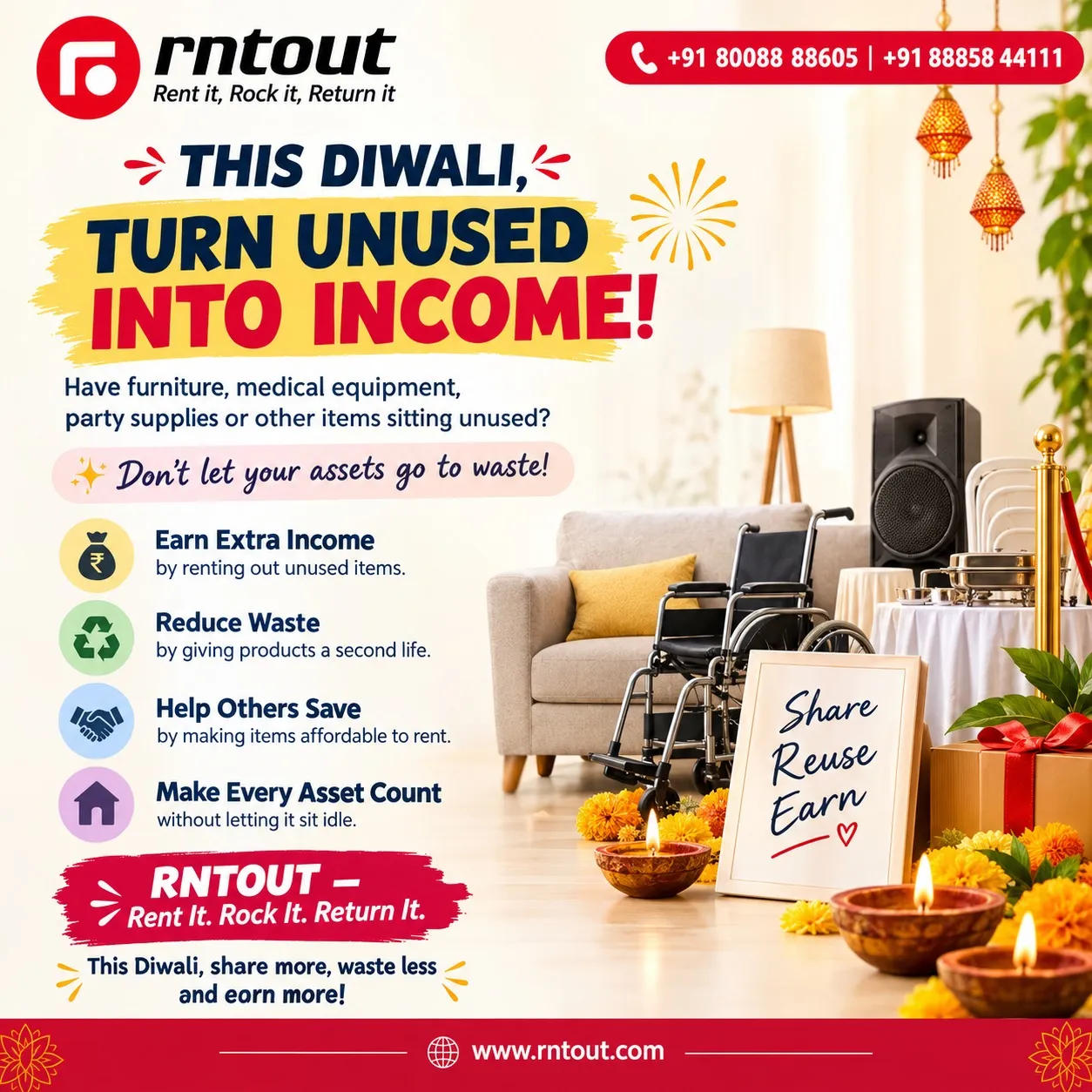
Turn idle furniture into income. Learn how RNTOUT makes renting smarter, cheaper and better for the planet.
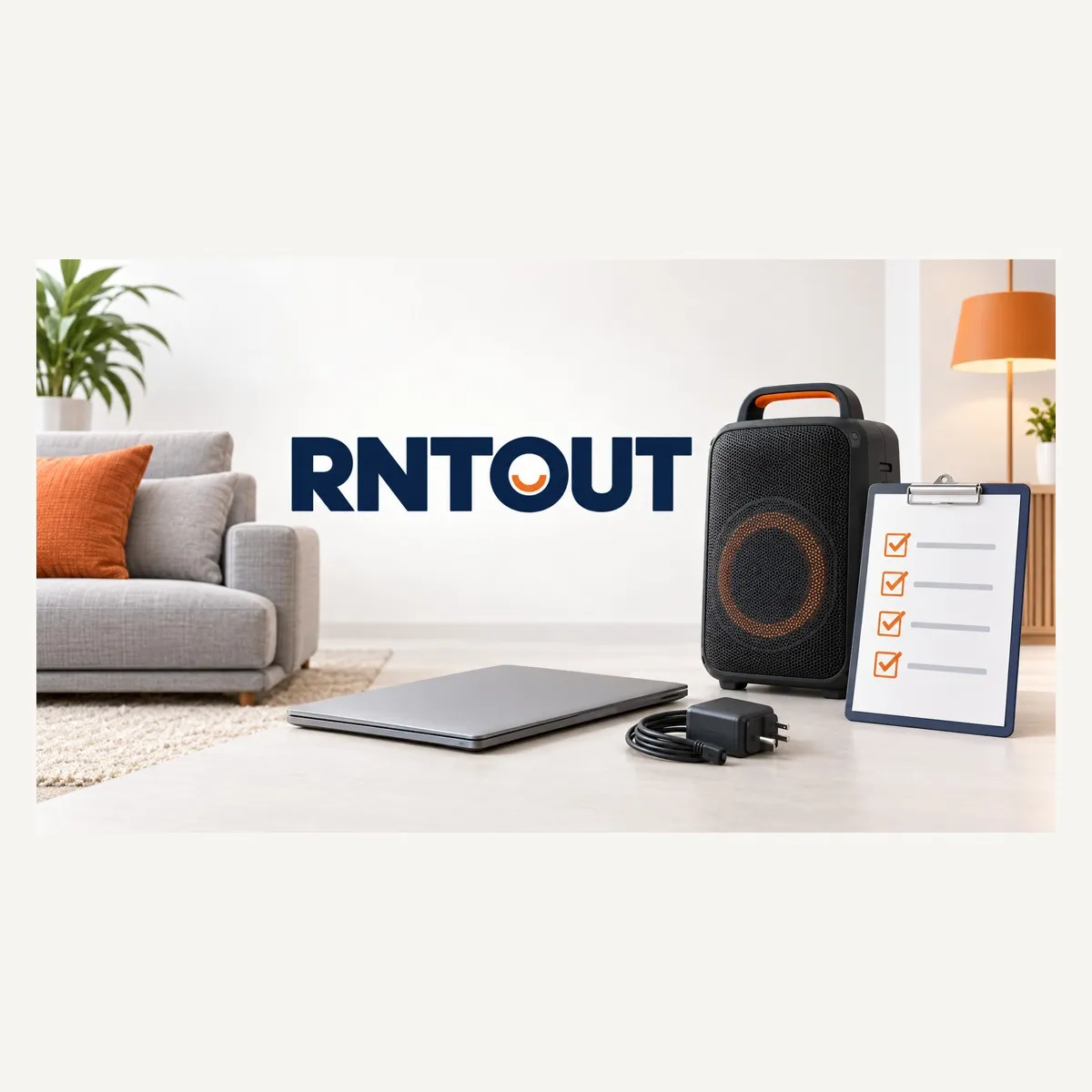
A practical rental handover checklist for India: match the delivered item, record its condition, count accessories and keep a clear return record.
Compare product rentals across India by the full cost, usable rental period and return terms. Use a renter-side checklist before deciding to rent or buy.
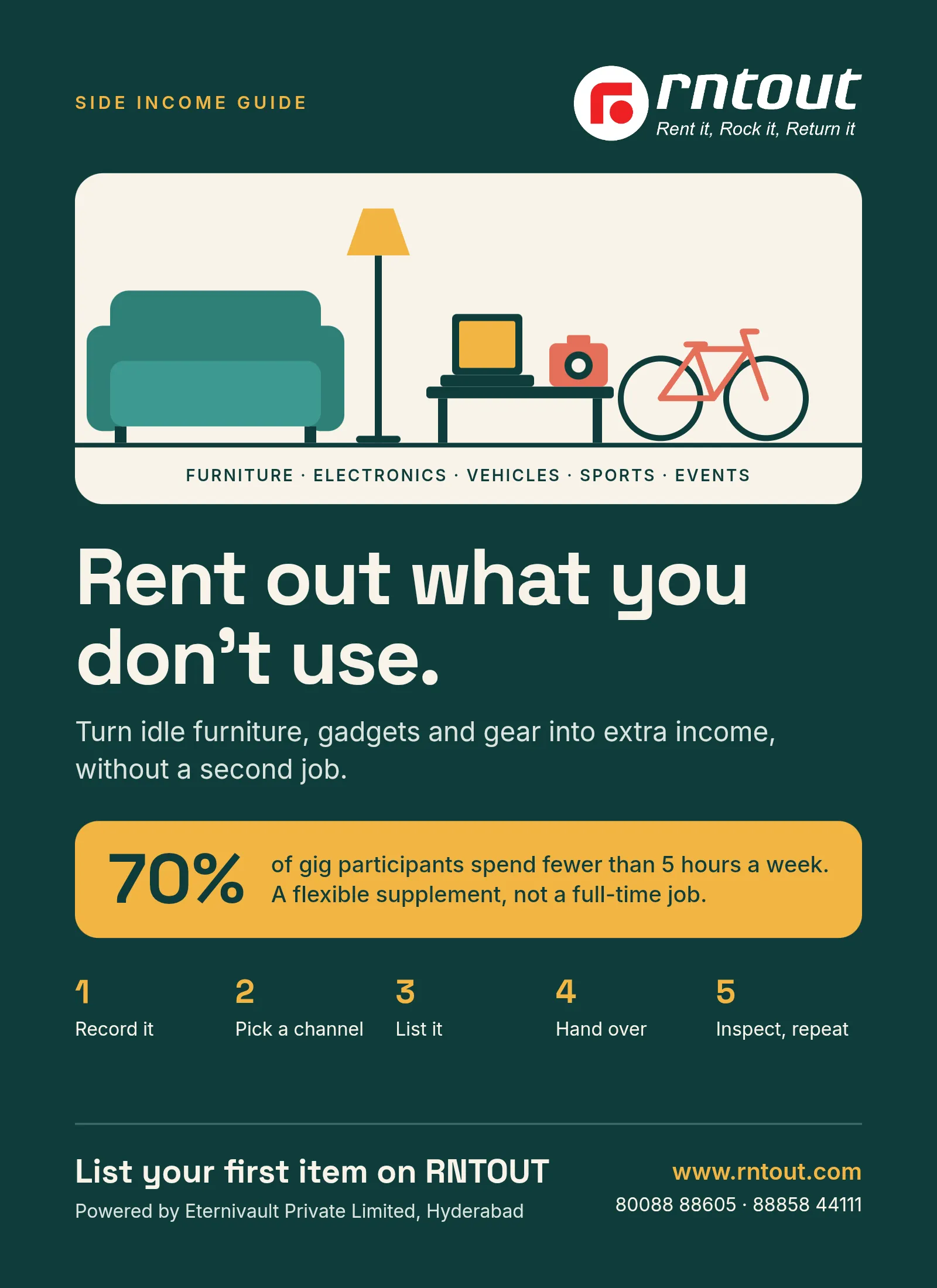
Learn how to rent out unused products and earn extra income. Get realistic returns, a step-by-step plan, listing tips, and safety advice for owners.

The Punchline Rent it. Use it. Return it. Repeat. When you rent, you’re not just saving money — you’re saving the planet. It’s a win for your wallet, a win for your lifestyle, and a win for the world
Never miss out on a deal or an update.


